



The forces suppressing stumpage prices across the South are not a temporary condition waiting to be reversed by the next housing cycle or the next round of tariffs on Canadian lumber. Part 1 of this series covered those forces in detail. This piece picks up where that one left off by asking a more useful question. How can landowners and land managers adapt to current market realities to maintain acceptable returns, and what does smart timberland management actually look like in this market?
The answer requires setting aside some practices and assumptions that have governed timberland management for a long time. The landowner still managing strictly around timber economics is optimizing for a return that is more like a savings account than a stock portfolio, and in a market where land appreciation and recreational value have become the dominant drivers of what rural property is worth in Alabama, that approach risks leaving the most significant part of the return untouched.
What Today’s Buyer Actually Wants
The buyers shopping for rural land in Alabama today fall broadly into two categories that share some common priorities but have meaningfully different needs, and understanding the distinction matters for how a property is managed and positioned.
Recreational and hunting land buyers are typically looking for larger tracts, often forty acres and up though the range extends in both directions, and they can tolerate more distance from town since the property is likely a destination more than a quick commute. A cabin or modest structure for extended stays is a common goal, but the full suite of residential utilities is not always a requirement. Well water is generally acceptable. What this buyer wants most is good access, usable interior roads and trails, established food plots or open areas with potential, water on the property, evidence of strong wildlife populations, and a landscape that looks actively managed.
The rural homestead or mini farm buyer is working from a different set of priorities. These properties tend to be smaller, typically somewhere between five and twenty acres, and proximity to town is more important than it is for the recreational buyer who may be traveling back and forth from another state on weekends. A homestead buyer may still be working a full-time job and needs to be within a reasonable commute. Full utilities are much more important to this buyer. Municipal water is preferred over a well system where it is available, and reliable power is not optional. The build site, the lay of the land, and the overall feel of the property matter as much as the acreage.
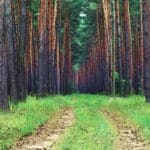
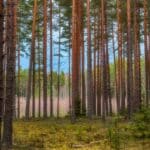
Despite their differences, both buyer profiles respond to the same fundamentals: good road access, maintained internal trails, existing clearings that can serve as food plots or home construction sites, attractive aesthetics, and a property that feels ready to use. A buyer walking a thinned pine stand with good visibility, native ground cover, and a maintained road feels something different than a buyer pushing through an un-thinned mid-rotation plantation where they can’t see ten feet in any direction. That feeling has real dollar value that shows up in how quickly a property goes under contract and how close the final sale price is to asking, even if the unmanaged stand holds more total timber value.
Reading the Stand: When the Biology Makes the Decision for You
A pine stand past due for intervention communicates that clearly to anyone who is paying attention. A bare understory shaded even at midday, narrow crowns, and suppressed trees falling to the ground with increasing frequency are the early warnings. Browning foliage, sawdust at the base of trees, and patches of standing dead timber are the late ones. By that stage, biology is making decisions the landowner delayed making and the available options have narrowed considerably. Some owners decide never to harvest at all, and a larger number draw a firm line at clearcutting, but a stand allowed to reach general decline often forces the very outcome the owner was trying to avoid. The alternative is a management approach that can make clearcutting unnecessary. Periodic thinning where possible, combined with a prescribed fire regime, can produce a stand that regenerates itself naturally over time, particularly with longleaf and shortleaf pine, which are fire-adapted species that thrive under exactly that kind of management. For landowners working with established loblolly, planting longleaf or shortleaf in gaps and openings within the existing stand can facilitate a gradual species transition without requiring a clean slate to start from.
Managing for the Market That Exists
Much of what dominated commercial timber management over the past several decades was designed to increase profit and reduce risk rather than produce quality habitat and desirable aesthetics. High-density planting maximized volume per acre and overall stem quality. Prescribed burning gave way to mechanical site prep and chemical treatments that were faster and eliminated fire liability. Natural regeneration of slower-growing species was largely abandoned in favor of planted loblolly with improved genetics. Those practices made sense for industrial timber production. They make considerably less sense for the private landowner whose primary return is now governed by land use and recreation value.
Producing the kind of property today’s buyer responds to requires management tools that industrial timber production left behind. Reduced planting density from the start of a rotation allows more light to reach the forest floor, slows canopy closure, and extends the window before thinning becomes urgent, which matters when finding a logger to take a thinning job has become increasingly difficult. When thinning does occur, heavier removals that reduce residual basal area to the range of 50 to 60 square feet per acre rather than the more traditional 70 to 80 open the stand more aggressively, improve visibility, and promote the native understory response that both wildlife and buyers find valuable. Prescribed fire, installed firebreaks, and targeted herbicide treatments round out an approach that keeps the understory open and suppresses invasive species. In pure loblolly stands, fire can still be used at early stages to create a savannah-like patchwork of open areas and low tree density that is highly beneficial to wildlife, though at the cost of most commercial timber value. Pre-commercial thinning is less commonly used by private landowners because the out-of-pocket cost is difficult to justify without the return from large scale industrial production, but it becomes a practical tool when transitioning from plantation toward natural regeneration, particularly in loblolly stands where early fire use could compromise future timber stocking.
Natural regeneration of longleaf and shortleaf pine, where the site supports it, deserves specific mention. These species produce timber that is longer-lived, more fire-tolerant, and more aesthetically pleasing than a loblolly plantation. The open structure of a mature longleaf stand with a maintained native grass understory takes decades to develop and buyers recognize and respond to it in a way that a dense mid-rotation loblolly plantation simply cannot match. Incorporating hardwood species in appropriate locations adds diversity, mast production, and long-term value that a monoculture cannot replicate.
None of these are new ideas. They are older practices that industrial timber management phased out in favor of profits. A property managed this way costs more to maintain than a standard commercial pine program, and it requires reinvesting a meaningful portion of timber sale proceeds back into the land rather than treating the harvest check as pure profit. That is a real constraint worth being direct about. The financial case rests on land value appreciation and recreational premium rather than stumpage revenue, and a property with an active management plan in motion is worth more to the right buyer than a pine thicket waiting for a logger.
Land value appreciation, unlike timber revenue, is not a liquid return. Capturing it requires a sale, which means the investment in active management is ultimately an investment in what the property will be worth to the next owner. For a long-term holder that timeline may span decades, and accepting that reality is part of what separates a deliberate land investment strategy from simply owning timber and hoping the market improves.
What Consistent Outperformance Actually Looks Like
The landowners who consistently outperform are not timing stumpage price cycles. They manage based on the biological needs of the stand, control invasive species rather than deferring that cost, treat access and infrastructure as part of the investment, and work with professionals who understand both the timber and the land transaction well enough to connect management decisions to market outcomes. That is a more reliable path to a strong return than any stumpage price forecast.
If you own timberland in Alabama and want to talk through what an active management strategy looks like for your specific property and situation, feel free to reach out.
This content may not be used or reproduced in any manner whatsoever, in part or in whole, without written permission of LANDTHINK. Use of this content without permission is a violation of federal copyright law. The articles, posts, comments, opinions and information provided by LANDTHINK are for informational and research purposes only and DOES NOT substitute or coincide with the advice of an attorney, accountant, real estate broker or any other licensed real estate professional. LANDTHINK strongly advises visitors and readers to seek their own professional guidance and advice related to buying, investing in or selling real estate.


Add Comment