



Editor’s Note: This is the 11th in a question-and-answer series with land real estate professionals — land agents, mortgage brokers, auctioneers, attorneys, timberland professionals and more. There’s a lot of information about the national real estate market out there, but it’s tough to find answers to your specific land real estate questions — until now. LANDTHINK believes that a lot of the stress of buying, selling, and owning land can be reduced or eliminated with some simple information from some of the best in the land industry.
Landbuyer Question:
I’ve been thinking about buying land in a rural area in West Central Georgia. My plan is to build a house in the future, but I was thinking in the meantime I could use the land as my own personal shooting range. What should I look out for when buying land to shoot? If I buy a random tract of land in the middle of nowhere, can I build a range or do I need permits? Are there zoning restrictions? Can I go to a real estate agent and tell them that I’m looking to buy land to shoot and they’ll find it, or would they freak out? Sorry for the questions, but I really do want this to happen. Thank you in advance for any insight you can offer.
Cary Farrington, Land Broker, Southeastern Land Group, Licensed in GA and AL
First, never apologize for asking a question. Real estate professionals are here to help, not discourage. Now, we may not be able to work magic with your hopes and dreams, but many of us land agents also live on the land and steward it ourselves. So many of us are comfortable in this space.
Now I’m no zoning attorney or an ammunitions expert – but I am Pro 2A and I believe keeping and bearing arms is core to who we are as a nation. “A well regulated militia, being necessary to the security of a free State, the right of the people to keep and bear Arms, shall not be infringed.” Amendment II to the U.S. Constitution, 1791
If you’re thinking about buying land to shoot on, just know this – “middle of nowhere” doesn’t mean no rules. It still comes down to zoning. One important note – “My plan is to build a house in the future.” This is likely the most important piece to this puzzle because buying acreage just to shoot bullets on can be an expensive way to shoot bullets. Make certain, before closing, the land is buildable to suit your needs and will pass a soil test for a septic system. Also make sure you not only have utilities and internet figured out, in addition to cost estimates on having those items set up. “Power at the road” doesn’t mean “free to run to my house site.” If your land agent isn’t guiding you through this part of the discussion, find one that understands it.
In west Georgia counties where I live and am raising my family, some properties will let you shoot without issue, others won’t. If it’s not clearly allowed, you could be looking at a special use permit, and that’s where things can get complicated. On permits, it depends how far you go. If you’re just shooting privately on your own land and zoning allows it, you’re probably fine. But once you start moving dirt, building berms, or putting up structures, you may need permits. And if you ever turn it into a business, that’s a completely different ball of wax.
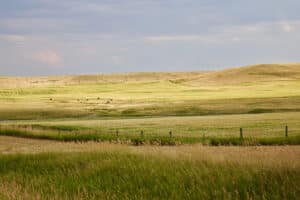
Beyond that, the makeup of the land itself matters. You need plenty of space, distance from neighbors, and a safe direction to shoot. What does “plenty of space” mean? Glad you asked… Clients often ask, “how many acres do I need?” And my answer is usually, “it depends.” It usually depends on how much you can afford, but the second big piece that makes up the answer is a response to what you plan to do. If someone wants privacy, I usually encourage them to start with 25-30 acres minimum. If someone just wants a homestead and doesn’t mind visible neighbors, 10-20 acres is plenty. If you came to me with this dream, shooting guns, I’d likely start at 50 acres and advise you, the more the merrier. Land topo and parcel shape always play a role, and these numbers are just generalities, but they’re good places to start. Can you shoot a gun on 1 acre, probably, are your neighbors going to appreciate that? Probably not. Always know what is behind your target, and always make sure you can see your target cleanly and clearly. Ideally a natural backstop, or at least room to build one. If you don’t have that, it’s not a range, it’s a problem waiting to happen. Accidents with guns can be tragic.
You’ll also want to pay attention to local rules on things like how close you can shoot to a road or property line, and noise. Georgia is a fairly gun-friendly state, but counties still have a say. And as we’ll discuss below, not all neighbors love the sound of you emptying a clip while they’re enjoying their morning coffee.
As for an agent- no, an experienced land agent shouldn’t freak out. A good land agent will understand exactly what you’re trying to do. Just don’t rely on them to figure out zoning. That part is on you to confirm you can do on the land what you want to do, before you buy. My best advice when interviewing agents is, ask them to tell you how much land and how many transactions they did in the last 12 months. Work with an agent that understands land. But also, before you start calling agents, make sure you’re ready to move forward. Buying land is different than buying a home. We all like to dream, but we also have to feed our families.
One more thing – and it matters more than you might think – be a good neighbor. Introduce yourself. Let folks around you know what you’re planning and find some common ground early. Shooting at daylight, dinner time, or late into the evening might not bother you, but it can wear on the people around you. And for some – especially veterans – it can hit a nerve you may not see. You don’t have to tiptoe, but you do need to be aware.
Bottom line, this is absolutely doable. Just make sure you buy the right piece of dirt on the front end, and handle it the right way once you’re there.
Do you have a specific land real estate question for one of our professionals? Submit your question and we might choose yours!
This content may not be used or reproduced in any manner whatsoever, in part or in whole, without written permission of LANDTHINK. Use of this content without permission is a violation of federal copyright law. The articles, posts, comments, opinions and information provided by LANDTHINK are for informational and research purposes only and DOES NOT substitute or coincide with the advice of an attorney, accountant, real estate broker or any other licensed real estate professional. LANDTHINK strongly advises visitors and readers to seek their own professional guidance and advice related to buying, investing in or selling real estate.


Add Comment