






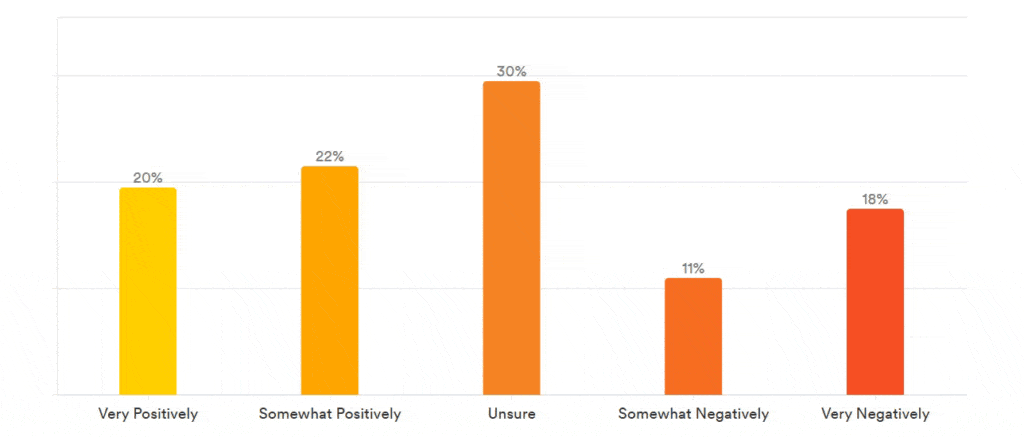
According to the March LANDTHINK Pulse results, 20% of respondents believe the rapid advancement of Artificial Intelligence (AI) will affect the future of farming VERY POSITIVELY, while 22% of respondents believe the rapid advancement of AI will affect the future of farming SOMEWHAT POSITIVELY. Another 30% of respondents said they were UNSURE of its effects on farming. Artificial Intelligence is a powerful tool that enables computer systems to perform tasks that would typically require human intelligence. AI is deeply embedded in daily routines, enhancing efficiency and personalization through tools like smartphone assistants (Siri/Alexa), navigation apps (Google Maps), and streaming recommendations (Netflix/Spotify). It powers social media feeds, spam filters, facial recognition, and smart home devices, automating tasks and improving convenience.
Last month, the March Pulse asked: How will the rapid advancement of Artificial Intelligence affect the future of farming?
The agricultural sector faces unprecedented challenges as global population growth demands increased food production. By 2050, the world will need to grow around 60% more food to feed nearly ten billion people. This challenge is compounded by high production costs, labor shortages, and geopolitical events that disrupt supply chains.
Global farming systems are stretched thin due to the combined pressures of rising global food demand, climate change, and environmental degradation. AI in agriculture offers innovative solutions to these pressing issues. The AI in the agriculture industry is projected to grow from $1.7 billion in 2023 to $4.7 billion by 2028.
AI is firmly established in modern agriculture, serving as a critical tool rather than just a trend. It is becoming a valuable tool in agriculture, ushering in a new era of data-driven, efficient farming practices that optimize traditional methods. AI is helping farmers make decisions, improve yields and conserve resources.
There are many ways that AI can be leveraged within agriculture. Here are just some of them:
Cost Savings
AI is a high-upfront-cost investment that pays off through long-term efficiencies and enhanced sustainability. The initial capital requirements for hardware, software, sensors, and robotics can be high, and sometimes prohibitive for small-scale farmers, but the long-term benefits include reduced production costs. AI can streamline labor by automating tasks like harvesting, weeding, and pest monitoring, often reducing data analysis time by up to 90%. AI-powered robots, drones, and computer vision systems replace intensive manual labor, addressing labor shortages and optimizing input usage to increase yields.
AI-driven robotics and autonomous machinery are revolutionizing traditional farming practices, by optimizing machinery use and targeting the application of inputs such as fertilizer and pesticides. Farmers produce more with fewer resources. Farmers can use AI-powered robotics to automate repetitive, time-consuming tasks that previously required a human eye, like sorting, seeding, weeding, and harvesting.
AI is revolutionizing crop monitoring and yield prediction by providing farmers with real-time insights, accurate forecasts, and actionable data. Predictive analytics based on historical data and weather trends also support better decisions around sowing, irrigation, and harvest timing. Some groups are even working on “smart” harvesting machinery that could identify ripe harvests automatically, leaving unripe plants to mature.
Between cost-savings in automation and harvest optimization, some studies have estimated that AI could reduce the costs of farming by at least 20% as the technology advances.
Sustainability
Sustainability in agriculture refers to the practice of producing food in a way that is environmentally, socially, and economically responsible. AI promotes sustainable farming methods by optimizing resource use. This includes reducing water consumption, minimizing chemical inputs and improving soil health. These practices help preserve farmland for future generations.
By monitoring and managing inputs like energy, water, chemicals, and soil health in real time, producers can make small adjustments that lead to big efficiencies, and better environmental outcomes.
AI could be the answer to sustainable farming as it:
- Reduces fuel consumption in farm machinery
- Enhances crop yields and their overall quality
- Conserves water but also improves nutrient uptake, prevents excessive watering, boosts efficiency
- Enables more accurate tracking of soil health metrics such as pH, moisture, and nutrient levels
- Reduces greenhouse gas emissions
- Optimizes irrigation and crop rotation strategies to build long-term resilience
- Helps farmers adopt regenerative agriculture practices, including reduced till, cover cropping and nutrient management
Data-Driven Decisions
Farming activities are complex processes with a high number of variables involved. Thanks to advances in precision agriculture, farmers can access comprehensive data on crop health, soil conditions and market trends. This enables them to make informed choices about farm operations.
Predictive analytics helps farmers mitigate risks by analyzing historical data, weather patterns, and real-time sensor inputs to forecast and manage threats before they cause damage. By identifying potential pest infestations, diseases, and severe weather events early, farmers can take proactive measures to protect their crops and livelihoods.
Seed Genetics
Artificial intelligence is transforming seed genetics by enabling breeders to analyze vast genomic and environmental datasets, accelerating the development of superior seed varieties from decades to just a few seasons. By using AI and machine learning, researchers can identify genetic markers linked to desirable traits, such as drought resistance, higher yield, and disease resistance, and predict how these traits will perform in different environments before they are even planted.
Livestock Health and Dairy Management
Artificial Intelligence is transforming livestock health and dairy management by transitioning from reactive to proactive, data-driven strategies. By integrating real-time data from IoT sensors, cameras, and wearable devices AI enables early disease detection. The sensors and cameras offer ongoing, real-time data, allowing for the observation of various health indicators, such as temperature, heart rates and activity levels. By analyzing and keeping track of this data, livestock managers can deal with any problems promptly before they worsen.
Within the dairy industry, there are many scenarios where AI usage can help farms achieve unprecedented levels of efficiency, productivity, and sustainability:
- Robotic Milking: AI systems in robotic parlors can identify individual cows, analyze milk quality (color, impurities), and tailor feeding to their specific needs.
- Automated Monitoring: AI-powered health monitoring systems use wearable sensors to track vital signs and behavior of each cow. They can monitor calving in maternity wards and tracking cattle behavior in large, extensive systems.
- Precision Feeding: AI technologies enable precision feeding by tailoring the amount and type of feed to each cow’s specific requirements. AI analyzes feed intake and milk output to optimize feeding strategies, reducing waste and decreasing nitrogen excretion.
- Reproductive Management: Artificial Intelligence and machine learning are revolutionizing dairy reproductive management by optimizing heat detection, predicting ovulation, and enhancing breeding strategies for improved herd fertility.
Studies suggest that AI-powered monitoring could create $70-$90 billion in value by 2030, with early detection systems potentially increasing milk production by 10-20% and reducing operating costs by 15-25%.
No matter what your opinion about artificial intelligence, it is here to stay. Farmland, water, and other resources are already under pressure. With the global human population projected to be nearly 10 billion by 2050, these sorts of agricultural optimizations and cost savings will be necessary to keep everyone fed. This is why AI matters and why it now plays such a vital role in agriculture. By addressing challenges such as labor shortages, climate volatility, and resource scarcity, AI transforms farming from an intuition-based practice to a data-driven, precise, and sustainable endeavor.
Do you have a suggestion for next month’s Pulse question? Submit your question and we might choose yours!
This content may not be used or reproduced in any manner whatsoever, in part or in whole, without written permission of LANDTHINK. Use of this content without permission is a violation of federal copyright law. The articles, posts, comments, opinions and information provided by LANDTHINK are for informational and research purposes only and DOES NOT substitute or coincide with the advice of an attorney, accountant, real estate broker or any other licensed real estate professional. LANDTHINK strongly advises visitors and readers to seek their own professional guidance and advice related to buying, investing in or selling real estate.



Add Comment