





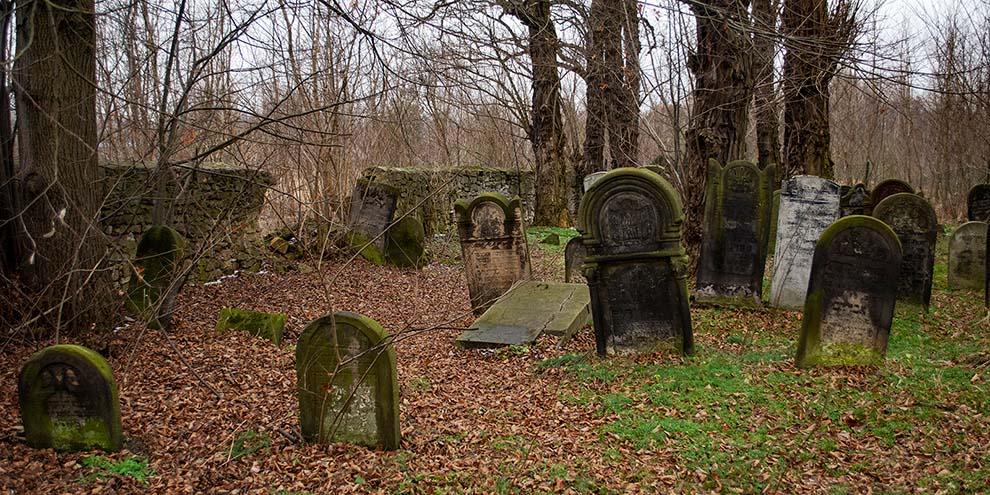

Imagine finding the perfect piece of rural land. It has beautiful rolling hills, mature hardwoods, a creek running through the property, and plenty of privacy. Maybe there’s an old farmhouse or a scenic homesite overlooking the countryside. Everything seems ideal until you discover a small, overgrown cemetery tucked away in the woods. A handful of weathered headstones, some barely legible, mark the final resting places of people who lived and died more than a century ago. Would that discovery change your mind about buying the property?
Last month, the LANDTHINK Pulse posed the following question to our audience: Would you buy land with an abandoned cemetery on it?
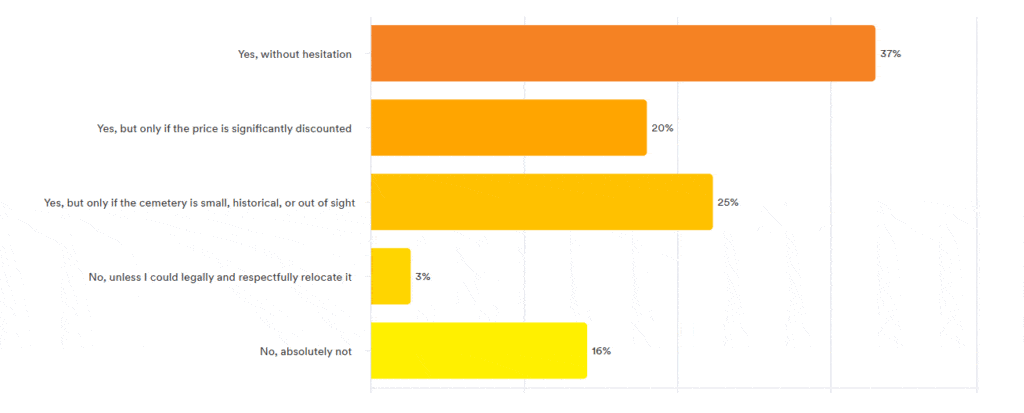
Our informal online survey revealed that 37% of respondents would purchase land with an abandoned cemetery WITHOUT HESITATION. Another 25% said they would consider buying the property if the cemetery was small, historical, or out of sight, while 20% would be willing to buy only if the price was significantly discounted. Just 16% said they would absolutely not purchase land containing an abandoned cemetery, and 3% would consider it only if the graves could be legally and respectfully relocated. Overall, the results suggest that most land buyers are willing to look past an old burial ground if the property is otherwise appealing.
A Little Spooky, but Full of History
For some buyers, the thought of owning land with a cemetery is unsettling. Cemeteries have long been associated with ghost stories, unexplained noises, and things that go bump in the night. An abandoned graveyard hidden deep in the woods can be especially eerie, with leaning headstones, tangled vines, and forgotten graves adding to the atmosphere. Even people who don’t believe in ghosts might feel a little uncomfortable knowing that generations of strangers are buried somewhere on their property.
But for others, an old cemetery is more fascinating than frightening. Rural America is filled with small family burial grounds, many dating back to the 18th and 19th centuries, when families commonly buried loved ones on their own farms and homesteads. Long before large public cemeteries became the norm, it wasn’t unusual for several generations of a family to be laid to rest on the same piece of land. As properties changed hands and farms were divided or abandoned, many of these burial grounds were left behind.
Discovering one of these cemeteries can offer an interesting glimpse into the property’s past. The names and dates carved into old headstones may reveal the families who once worked the land, raised children, and helped establish the surrounding community. Some graves may belong to early settlers, Civil War veterans, or individuals whose stories have been lost to time. For history enthusiasts, researching those names through old census records, historical societies, and genealogical websites can turn an overlooked corner of the property into a fascinating connection to the past.
Of course, owning land with a cemetery involves more than deciding whether you’re comfortable living near the deceased.
What Buyers Should Know Before Purchasing
There are legal and practical considerations that prospective buyers should understand before purchasing. One of the biggest concerns is access. Just because a cemetery is located on private property doesn’t necessarily mean the landowner can prevent others from visiting it. Depending on state laws and existing property rights, descendants of those buried there may have a legal right to access the graves. Even if a cemetery has been abandoned for decades, relatives may occasionally want to visit, place flowers, clean headstones, or maintain family burial plots.
For buyers who value privacy, the possibility of unfamiliar visitors crossing their property can be a concern. It’s important to determine whether there is an established access route, recorded easement, or legal obligation to accommodate cemetery visitors. State laws vary considerably, so understanding those rights before closing can help avoid disputes with descendants or neighboring landowners later.
There are also restrictions on what can be done with the land surrounding a cemetery. Buyers planning to build a home, construct roads, clear timber, or develop the property should determine exactly where the burial ground is located and whether any unmarked graves extend beyond the visible headstones. Burial sites are often protected by state laws, and disturbing graves or removing headstones without proper authorization can result in serious legal consequences.
Moving a cemetery isn’t necessarily an easy solution, either. Relocating human remains generally requires legal approvals, careful coordination, and potentially significant expense. In some cases, descendants must be notified or involved in the process. For most buyers, preserving the burial ground in its original location may be far more practical than attempting to move it.
Is an Old Cemetery Really a Reason to Walk Away?
The presence of a cemetery can also influence a property’s market value, although the impact depends largely on its size, location, and the intended use of the land. A small family cemetery occupying a secluded corner of a 200-acre recreational tract may have little effect on the property’s overall appeal. On the other hand, a cemetery situated in the middle of the only suitable homesite, or one that interferes with future development plans, could significantly limit the property’s usefulness.
That distinction may explain why 20% of Pulse respondents said they would purchase land with an abandoned cemetery only if the price was significantly discounted. These buyers may recognize the property’s potential but also want compensation for the restrictions, uncertainties, or future responsibilities associated with owning it.
Interestingly, the largest percentage of respondents, 37%, indicated that an abandoned cemetery wouldn’t discourage them from purchasing land at all. Combined with the 25% who would buy under certain conditions, the results suggest that many land buyers are willing to accept a cemetery as part of a property’s history rather than viewing it as a problem. And perhaps that’s the best way to look at it.
Every piece of land has a history, whether it’s visible or not. Old stone walls, abandoned barns, forgotten wells, and family cemeteries are reminders of the people who lived there long before us. While a cemetery may not be something buyers actively seek out, it doesn’t necessarily have to diminish the beauty, enjoyment, or investment potential of a property.
For anyone considering purchasing land with an abandoned cemetery, the key is doing the proper due diligence. Research the cemetery’s history, verify its boundaries, understand applicable laws and access rights, and consider how its presence might affect future plans for the property. A knowledgeable land real estate professional and local real estate attorney can help buyers evaluate those issues before making a commitment.
Ultimately, an old cemetery doesn’t have to be a deal-breaker. If you’ve found a beautiful piece of land that meets your needs, a few weathered headstones beneath the trees might simply be part of what makes the property unique. After all, those who came before us have their own connection to the land, and preserving a small piece of their history may be a worthwhile responsibility for its next owner.
Do you have a suggestion for next month’s Pulse question? Submit your question and we might choose yours!
This content may not be used or reproduced in any manner whatsoever, in part or in whole, without written permission of LANDTHINK. Use of this content without permission is a violation of federal copyright law. The articles, posts, comments, opinions and information provided by LANDTHINK are for informational and research purposes only and DOES NOT substitute or coincide with the advice of an attorney, accountant, real estate broker or any other licensed real estate professional. LANDTHINK strongly advises visitors and readers to seek their own professional guidance and advice related to buying, investing in or selling real estate.



Add Comment