







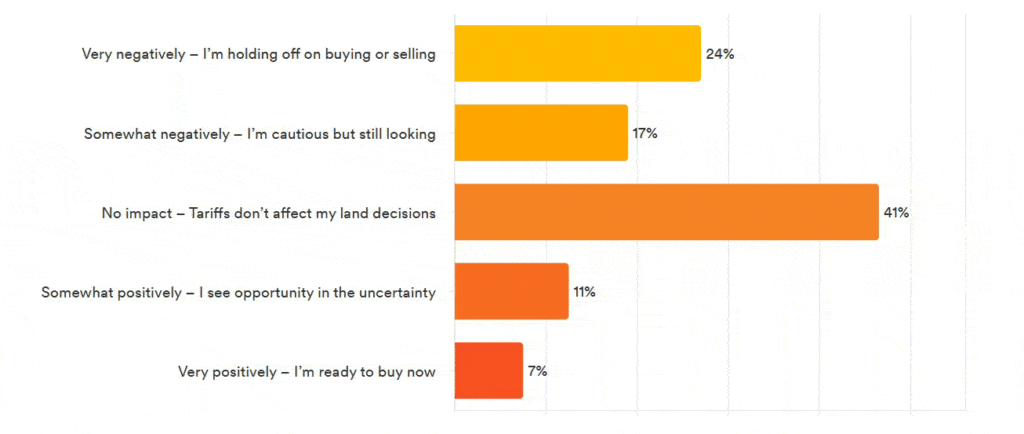
According to the April LANDTHINK Pulse results, 41% of respondents said that current U.S. trade tariffs have had NO IMPACT on their confidence in the land market and that tariffs don’t affect their land decisions. Another 41% expressed some degree of negativity, with 24% saying they were holding off on buying or selling, and 17% saying they were cautious but still looking for land. The tariff increases during the second Trump administration have been historic in their magnitude and scope, dwarfing even those from Trump’s first term. Many feared that these tariffs would have dramatic impacts on the economy, but for the most part, the tariff impacts have been muted in the U.S.
Last month, the April Pulse asked: How are current U.S. trade tariffs affecting your confidence in the land market?
While trade policy might seem distant from your daily life, it can have ripple effects that reach right into your community, influencing everything from the cost of building a new home to the interest rate on your loans. Whether you’re thinking of buying or selling land, understanding how tariffs might shape the real estate land market is crucial.
Most land buyers and sellers are relatively insulated from the direct impact of international trade tariffs, as raw land does not rely on global supply chains, imported building materials, or cross-border manufacturing. While tariffs can inflate construction costs for new housing and commercial developments, vacant and agricultural land primarily derive their value from domestic demand and local geography.
Why Land Investments Are Resilient to Tariffs
No Imported Components: Tariffs apply to physical, manufactured goods and raw materials. Land is a fixed, domestic asset and does not incur duties, shipping surcharges, or supply chain delays.
Diversified Usage and Revenue Streams: The intrinsic value of land can often be protected or monetized in alternative ways if trade policies affect broader markets. You can utilize options such as conservation easements, recreational leasing, or renewable energy partnerships (like solar or wind farms).
Defensive Asset Class: Historically, real assets like land act as a hedge against inflation and economic volatility. Because physical land is finite, its value tends to hold steady even when international markets face disruption.
Tariffs generally do not affect raw land directly, but they heavily influence its value indirectly by altering the profitability of the industries that use or develop it. Land values are deeply tied to agricultural commodity exports and the cost of construction.
Key Considerations for Farmland and Ag Investors
While general land investments largely avoid direct tariff costs, agricultural land is often tied to global trade through commodity exports.
Input Costs: Tariffs levied on imported goods, such as steel for tractors or foreign-made fertilizers, increase per-acre production costs.
Export Markets & Prices: Foreign retaliation targeting U.S. crops (e.g., soybeans, corn) restricts export volumes. Lower commodity prices and higher input expenses create a margin squeeze for farmers, which can suppress cash rents and soften buyer demand for farmland, leading to downward pressure on its value.
Commercial and Development Impacts
For raw land intended for commercial, industrial, or residential development, tariffs impact the broader real estate and construction sectors.
Building Costs: Tariffs on imported lumber, steel, and aluminum increase development costs. Higher building costs often force developers to pay less for the raw land to keep their overall projects financially viable.
Investor Confidence: Uncertainty in global trade policies and increased development costs can sideline real estate funds and institutional investors, reducing transaction volumes and blunting land appreciation.
How Tariffs Impact Consumer Confidence
Tariffs generally reduce consumer confidence by driving up the cost of living and fueling broader economic uncertainty. When import taxes are passed down to shoppers, the resulting higher retail prices and concerns about potential job impacts cause consumers to tighten their budgets and scale back spending.
Higher Prices: Tariffs act as a tax on imported goods. When companies pass these added costs to consumers, it leads to inflation on everyday items like groceries, electronics, and clothing. This directly eats into purchasing power and personal financial security.
Economic Anxiety: The process of enacting and altering tariffs creates market instability and unpredictability. Uncertainty regarding future job security and household budgets causes consumers to become significantly more pessimistic about the broader economy.
Slower Spending: When shopper sentiment sours, consumers often delay major purchases (such as vehicles or home goods) and prioritize bulking up emergency savings.
Broader Economic Headwinds
Tariffs do not directly prevent people from buying or selling land, but they indirectly make it harder by driving up the overall costs of building, borrowing, and living. By inflating the prices of essential goods, tariffs create a ripple effect that impacts land acquisition in several key ways.
It can affect the recreational land market, largely indirectly through the agricultural and broader economic ripples they cause. Tariffs drive market volatility that influences both the cost of owning and enjoying rural property.
The inflationary pressures created by tariffs often lead the Federal Reserve to maintain higher interest rates. Stricter or more expensive credit limits borrowing power for both homebuilders and agricultural buyers, which can cool overall land markets.
Tariffs add another layer of complexity to the real estate market. While the exact long-term effects remain to be seen and depend on specific policies and global responses, understanding the potential impacts is key. Higher construction costs, volatile mortgage rates, and general economic uncertainty are all factors to watch. Making informed decisions requires staying updated and working with professionals who understand these dynamics.
Do you have a suggestion for next month’s Pulse question? Submit your question and we might choose yours!
This content may not be used or reproduced in any manner whatsoever, in part or in whole, without written permission of LANDTHINK. Use of this content without permission is a violation of federal copyright law. The articles, posts, comments, opinions and information provided by LANDTHINK are for informational and research purposes only and DOES NOT substitute or coincide with the advice of an attorney, accountant, real estate broker or any other licensed real estate professional. LANDTHINK strongly advises visitors and readers to seek their own professional guidance and advice related to buying, investing in or selling real estate.



Add Comment